Fishing in Zimbabwe
Beyond Victoria Falls: between the Zambezi and the Limpopo, Zimbabwe offers the sport angler exotic fish and spectacular fishing in stunning localities.
View 2 listings
2
listings
–
price starting from
3
fish species
–
to the nearest trip
About Zimbabwe
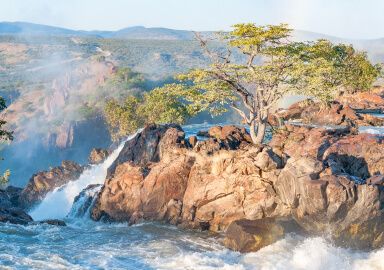
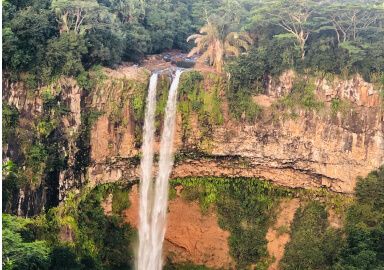
Zimbabwe is a landlocked country in central southern Africa. It is bounded in the south by South Africa, in the east by Mozambique, Zambia in the north-west and Botswana in the west. With the surface area of about 390 757 square km. (150 872 sq. mi.), it is slightly larger than California, while the population of about 16 600 000 is roughly comparable to New York State. Zimbabwe’s geography is largely defined by its great rivers, from the Zambezi, with its world-famous Victoria Falls, on the northern border, to the Limpopo on the southern border. It can also boast of Lake Kariba, one of the largest man-made reservoirs in the world.
Most waterbodies support important commercial and small-scale (artisanal) fisheries, and an increasing number also have growing sport fishing activities or potential. The climate is mostly hot and arid, although high plateaus in the north are cooler, and may even experience frost in winter. The official language is English, and over 80 % of people identify as Christian. The infrastructure is good, but often ageing, and the road network, although comprehensive, has stretches in poor condition. The people are generally friendly and helpful.
Fishing Types
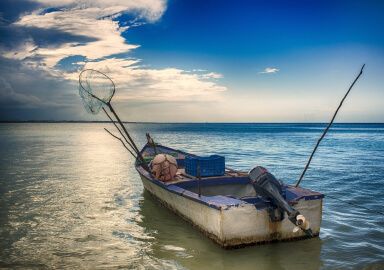
Fishing is an important part of life in Zimbabwe. There’s widespread and well-organized commercial fishing, mostly for “kapenta”, a small river sardine, and makes a great contribution to the economy. So are the local artisanal fisheries, which are based on such methods as traditional traps, handline, rod and line fishing, gill and seine netting, and even poisoning. Most local commercial fisheries are seasonal, being limited to the wetter, summer months when fish populations and distribution expand. The Zambezi River, however, is large, perennial and supports fisheries through the seasons.
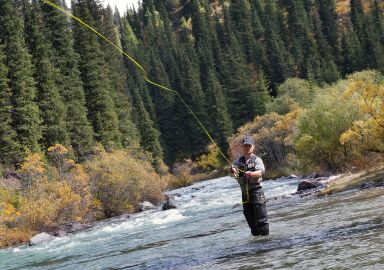
Sport-fishing has always played a part in fishing in Zimbabwe as well. The British colonists, as in many other countries, introduced trout, which thrived in some cooler, mountainous areas. Fly fishing for trout is still possible, but the current main focus for sport anglers is undoubtedly the Zambezi River and its Kariba Dam.
Targeted Fish Species
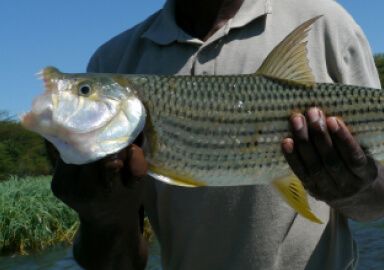
The top sport fishing target species is the African tiger fish - Hydrocynus vittatus. Although the goliath tiger fish can be larger, the African tiger can attain 15 kg. (33 lbs). It enjoys a well-deserved worldwide fame, for its voracious feeding habits, spectacular leaps and strong fighting ability, not to mention the exotic appearance with numerous dangerous-looking teeth. The tiger fish inhabits the major rivers and dams in Zimbabwe and sport fishing is often well-organised.
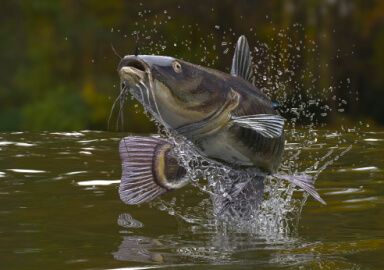
Other alluring species include the vundu (Heterobranchus longifilis), which is the largest fish in Zimbabwe and may reach 117 cm. (46 in.) and a mass of about 55 kg. (121 lbs.). Another big freshwater fish is the sharptooth catfish that can grow even longer, to 140 cm. (55 in.), although with a somewhat smaller weight of up to 30 kg (66 lbs.), as well as the African pike.
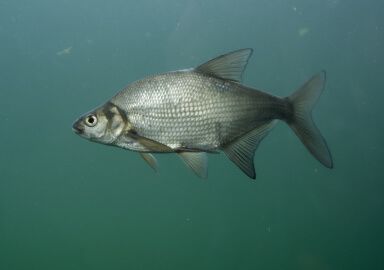
Brown and rainbow trout can be found in some of the cooler mountainous areas and largemouth bass have been introduced to and can be caught in many of the smaller dams. In addition, the rivers and lakes in Zimbabwe are swarming with various kinds of tilapia and barbel. The locals indiscriminately call them all ‘bream’ or ‘catfish’, but there are literally hundreds of recognized species of tilapia and barbel family, so a trip to Zimbabwe can add substantially to any “Species I caught in my lifetime” list.
Fishing Techniques
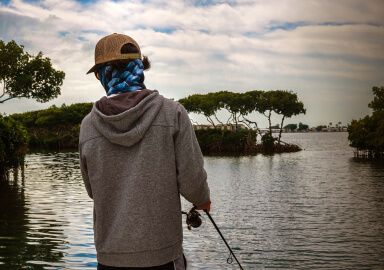
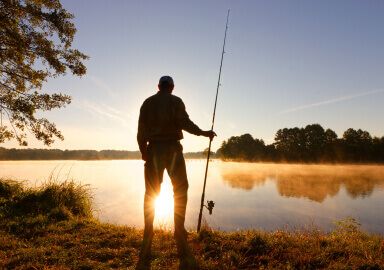
The best well-known sport angling in Zimbabwe is fishing for African tiger fish in the Zambezi River and specifically in Kariba Dam. Shore, small boat and houseboat fishing are all on offer and, using any, amazing sport and excellent catches are possible. Fly fishing popularity is growing rapidly as the water is often clear, the fish large and the fight exceptional. It is difficult, however, to set a hook in the bony mouth of a tiger fish and many hooked fish are lost.
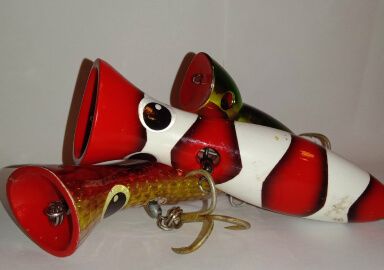
Lure fishing, with a strong spinning rod and good fixed spool reel and braid, plus a wire trace, can improve “landing rates” and reduce frustration. Hard and soft lures, usually retrieved rapidly, work well. Live or dead bait, using a circle hook, can increase landing rates and satisfaction even further.
Fishing for vundu and other catfish is best using heavy spinning tackle and dead or live bait. These fish have no sharp teeth, so no wire is necessary. Trout may be caught on fly using “normal” equipment. Bass, “barbs”, tilapias and other indigenous species may be caught using a light tackle spinning outfit, using hard lures, plastics or bait.